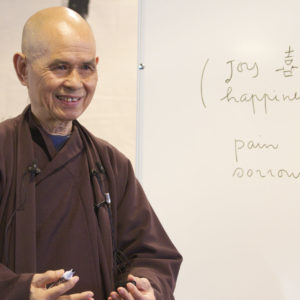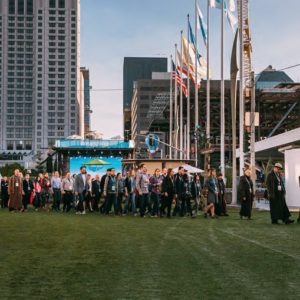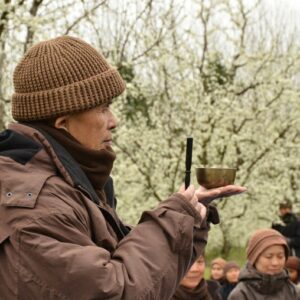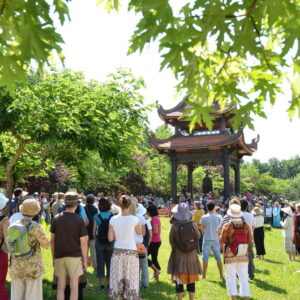

In the spring of 2000, practitioners came from across the world to Thich Nhat Hanh’s “Eye of the Buddha” retreat at Plum Village. If you have not had the pleasure of being on retreat with Thich Nhat Hanh (or if you have), here is an opportunity to read in succession each Dharma talk he gave at the 21-day retreat. We will be posting them week by week. Enjoy your reading the seventh talk... * we would like to apologize for not being able to offer the 6th talk which is the Q&A as we do not have a completed version of it...
1 | 2 | 3 | 4 | 5 | 6 | 7 | 8 | 9 | 10 | 11 | 12 | 13 | 14 | 15 | 16 | 17 | 18 | 19
The Eye of the Buddha RetreatA 21-day retreat in Plum Village June 2nd - 22, 2000Transcriber: Tenzin Namdrol Edited by: David HaskinTeachings by Thich Nhat Hanh Tape 7, June 8, 2000
Last Updated (Tuesday, 03 November 2009 05:28)
In the spring of 2000, practitioners came from across the world to Thich Nhat Hanh’s “Eye of the Buddha” retreat at Plum Village. If you have not had the pleasure of being on retreat with Thich Nhat Hanh (or if you have), here is an opportunity to read in succession each Dharma talk he gave at the 21-day retreat. We will be posting them week by week. Enjoy your reading the fourth talk...
1 | 2 | 3 | 4 | 5 | 6 | 7 | 8 | 9 | 10 | 11 | 12 | 13 | 14 | 15 | 16 | 17 | 18 | 19
The Eye of the Buddha RetreatA 21-day retreat in Plum Village June 2nd - 22, 2000Teachings from Thich Nhat Hanh Tape 4, June 6th , 2000 Transcriber: Tenzin Namdrol Edited by: Mary Michal & Susan O’Leary
Last Updated (Tuesday, 03 November 2009 05:26)
In the spring of 2000, practitioners came from across the world to Thich Nhat Hanh’s “Eye of the Buddha” retreat at Plum Village. If you have not had the pleasure of being on retreat with Thich Nhat Hanh (or if you have), here is an opportunity to read in succession each Dharma talk he gave at the 21-day retreat. We will be posting them week by week. Enjoy your reading the third talk...
1 | 2 | 3 | 4 | 5 | 6 | 7 | 8 | 9 | 10 | 11 | 12 | 13 | 14 | 15 | 16 | 17 | 18 | 19
The Eye of the Buddha RetreatA 21-day retreat in Plum Village June 2nd - 22, 2000Teachings from Thich Nhat Hanh Tape 3, June 4th , 2000 Transcriber: Tenzin Namdrol Edited by: David Haskin & Susan O’Leary
Last Updated (Tuesday, 03 November 2009 05:27)
In the spring of 2000, practitioners came from across the world to Thich Nhat Hanh’s “Eye of the Buddha” retreat at Plum Village. If you have not had the pleasure of being on retreat with Thich Nhat Hanh (or if you have), here is an opportunity to read in succession each Dharma talk he gave at the 21-day retreat. We will be posting them week by week. Enjoy your reading the second talk...
1 | 2 | 3 | 4 | 5 | 6 | 7 | 8 | 9 | 10 | 11 | 12 | 13 | 14 | 15 | 16 | 17 | 18 | 19
The Eye of the Buddha RetreatA 21-day retreat in Plum Village June 2nd - 22, 2000Teachings from Thich Nhat Hanh Tape 2, June 3rd , 2000 Transcriber: Tenzin Namdrol Edited by: Jim Roseberry
Last Updated (Tuesday, 03 November 2009 05:28)
In the spring of 2000, practitioners came from across the world to Thich Nhat Hanh’s “Eye of the Buddha” retreat at Plum Village. If you have not had the pleasure of being on retreat with Thich Nhat Hanh (or if you have), here is an opportunity to read in succession each Dharma talk he gave at the 21-day retreat. We will be posting them week by week. In this first talk, “Taking Refuge in the Sangha,” Thây describes the power of practicing as part of the Sangha body. Enjoy your reading…..
1 | 2 | 3 | 4 | 5 | 6 | 7 | 8 | 9 | 10 | 11 | 12 | 13 | 14 | 15 | 16 | 17 | 18 | 19
The Eye of the Buddha RetreatA 21-day retreat in Plum Village June 2nd - 22, 2000Teachings from Thich Nhat Hanh Tape 1, June 2nd , 2000 Transcriber: Tenzin Namdrol Edited by: Susan O’Leary
Last Updated (Tuesday, 03 November 2009 05:27)
Today is the 26th of February, 1998. We’re in the New Hamlet, in the Winter Retreat. Today is the last dharma talk of this retreat, and after that we will be lazy for twelve, thirteen, or fourteen days. We will meet again on Thursday the 12th of March, and we will continue with the teachings of the Winter Retreat, which was called, "The Retreat on the Opening of the Lotus with a Thousand Petals". We will call the Spring Retreat the same.
Last Updated (Wednesday, 19 August 2009 13:55)
Thus have I heard. At one time the Venerable Mahamoggallana was staying with the Bhagga people in Sumsumaragira, in the Deer Park in the Bhesakala grove. The Venerable Mahamoggallana addressed the bhikkhus: "Dharma friends." "Yes friend", they replied to the Venerable Mahamoggallana. The Venerable Mahamoggallana spoke as follows:
Last Updated (Wednesday, 19 August 2009 13:35)
Breathe, my child!
Dear Friends,
Today is the 26th of March and we are in the New Hamlet in the Spring Retreat.
When we hear the sound of the bell, we should open ourselves up to allow all the generations of ancestors in us to hear the bell at the same time as we do. It means we shouldn’t imprison ourselves in a shell of self – we should allow our ancestors to listen to the bell at the same time. That is our practice at that moment, because all the generations of ancestors, including our father and our mother are in us in a very concrete way - in every cell of our body. The body contains the mind – the soma contains the psyche, and we could say that the mind also contains the body. That means that the psyche contains the soma and that psyche includes feelings, perceptions, mental formations and consciousness and we should learn to see our mental formations are made out of cells, just as the body is made out of cells. The cells of the body contain the cells of the consciousness and the cells of the consciousness contain the cells of the body.
Last Updated (Wednesday, 19 August 2009 13:46)
Dear Sangha, today is the fifth of April 1998. We are in the Upper Hamlet, in Spring Retreat. Now we have come to the liturgy for Thursday morning. It includes the Sutra on Knowing the Better Way to Live Alone, and the Sutra on the Forty Verses or Ratnagunasamcaya. The Sutra on Knowing the Better Way to Live Alone is called the Bhaddekaratta Sutta in Pali. It belongs to the Majjhima Nikaya 131.
"Knowing how to live alone" here does not mean to live in solitude, separated from other people, on a mountain in a cave. "Living alone" here means living to have sovereignty of yourself, to have freedom, not to be dragged away by the past, not to be in fear of the future, not being pulled around by the circumstances of the present. We are always master of ourselves, we can grasp the situation as it is, and we are sovereign of the situation and of ourselves. There are many places in the sutras where the Buddha says that "being alone" does not mean to be separated from other people. We can be sitting in a cave, but we are not necessarily alone, because we have lost ourselves in our thinking, so we are not alone. In the Majjhima Nikaya there are at least four sutras that talk about the subject of knowing how to live alone, and in the Madhyama Agama there are also sutras that talk about the subject of living alone. Therefore, we know that the subject of living alone is a very important subject in the teachings of the Buddha. We have to know how to do this, how to live in freedom, not being imprisoned by the future and not being carried away by things in the present.
Last Updated (Wednesday, 19 August 2009 13:51)
Transcription of Thây's second Dharma talk on July 26th 2001 welcoming the Palestinian-Israeli group.
There are four foundations for mindfulness. That means that there are four kinds of objects of the practice of mindfulness. We know that the first object of mindfulness is our own body. The second domain of mindfulness is mindfulness of feelings. The third domain is the domain of mental formations - of mind. Mind here is mental formations. And we already know that formation is a technical term, meaning everything that manifests based on conditions. The table is a formation, the flower is a formation. But here we do not speak about physical formations; we speak about mental formations, like anger, hatred, love, compassion, jealousy, tolerance - all are mental formations. In my tradition we speak of fifty-one categories of mental formations.
|
|